R U Dead Yet? (R.U.D.Y.) Attack
R.U.D.Y. is a low-and-slow attack that can keep a server tied up indefinitely. How to stop a R.U.D.Y. attack.
Read guideResources
R.U.D.Y. is a low-and-slow attack that can keep a server tied up indefinitely. How to stop a R.U.D.Y. attack.
Read guideThe Model Context Protocol (MCP) enables AI agents to access external tools and data sources so that they can more effectively take action.
Read guideVibe coding can speed up ideation for programmers and non-programmers alike — if you know how to do it properly.
Read guide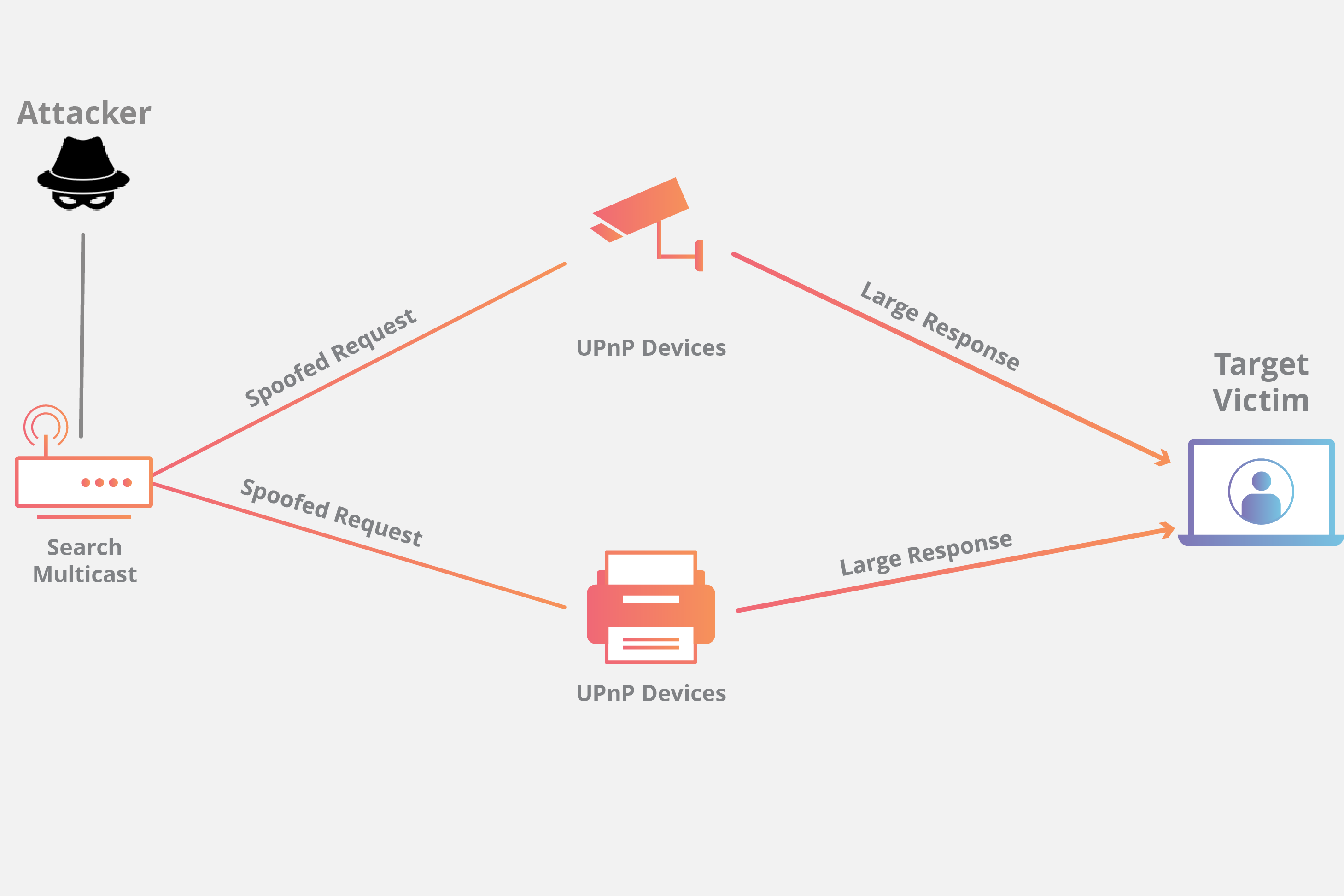
A Simple Service Discovery Protocol (SSDP) attack is a reflection-based distributed denial-of-service (DDoS) attack that exploits Universal Plug and Play (UPnP) networking protocols.
Read guide
A Traversal Using Relays around NAT (TURN) server allows for reliable WebRTC connections in highly restrictive networks.
Read guideA cloud-native application protection platform (CNAPP) is a unified solution for protecting applications built and hosted in the cloud.
Read guideAI hallucinations are incorrect or false responses given by generative AI models.
Read guideDuring a supply chain attack, attackers exploit third-party dependencies in order to infiltrate a target’s system or network.
Read guideAI agents are sometimes called the third wave of artificial intelligence, being preceded by predictive AI (first wave) and generative AI (second wave).
Read guideEncrypted SNI, or ESNI, helps keep user browsing private. Learn how ESNI makes TLS encryption more secure by using DNS records and public key cryptography.
Read guideIoT security is the practice of protecting Internet of Things (IoT) devices from attack.
Read guideThe California Consumer Privacy Act (CCPA) gives California residents control over the personal data that businesses collect about them.
Read guideAn API endpoint is the end of an API connection, where an API call is received.
Read guideA campus area network, or CAN, is a computer network that spans a limited geographic area. Learn how CAN networks differ from wide area networks (WAN).
Read guide